About the Paintings
Descent from the Cross
Filippino Lippi
Pietro Vannucci detto Perugino
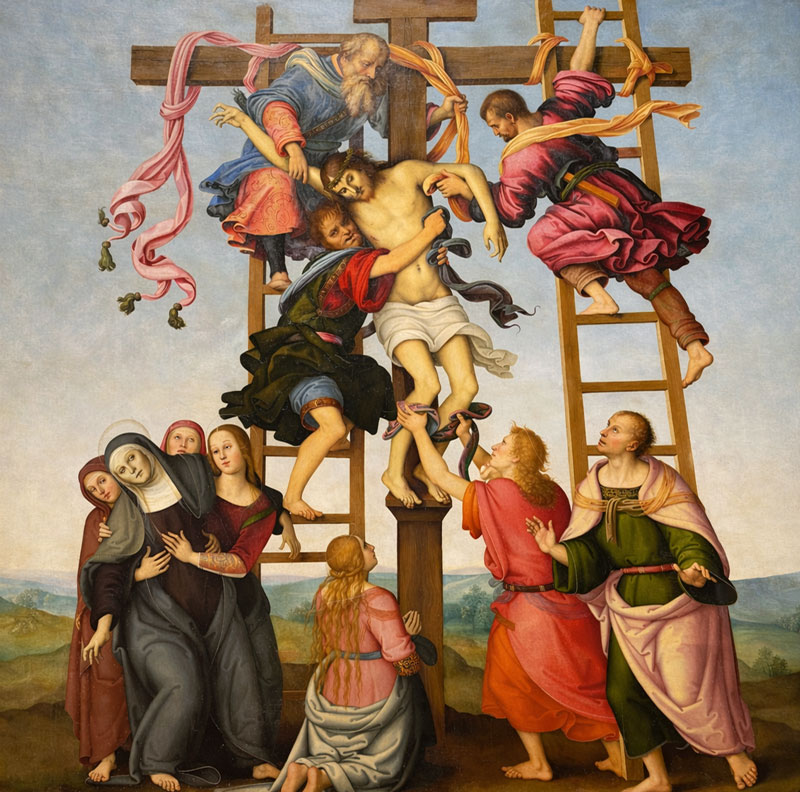
This large painting was commissioned from Filippino Lippi by the friars of SS. Annunziata of Florence for the high altar of the church. The design for this complex altarpiece involved two central panels, one on each side – the front of which, depicting the Assumption of the Virgin, is still in the church today – and various smaller panels. The painting was restored in 1997 at the Galleria dell’Accademia, to avoid moving such a large work to another location and especially since it was in poor condition at the time. Lippi began painting the upper part with the figure of Christ, but he died soon after, in 1504, shortly after he had begun painting the face of the Magdalene, who he had envisioned embracing the Cross, as revealed by the X-rays made during the restoration. We know from Vasari that Pietro Perugino began working on the painting in 1507, completing it that same year, along with a number of smaller panels that are now dispersed among various museums and private collections. The Umbrian painter worked on the commission with assistants from his highly organised workshop; according to some scholars, these included Andrea d’Assisi and possibly also the young Raphael, who was in Florence in about 1504. According to the scholars who believe that Raphael might have contributed to the painting, his hand can be identified in the Magdalene at the foot of the Cross and in the St John, both of whom seem to be of a much higher quality than the group of Pious Women on the left.
Description Credit: Galleria dell'Accademia di Firenze
Redeemer in Glory
Antonio Allegri da Correggio
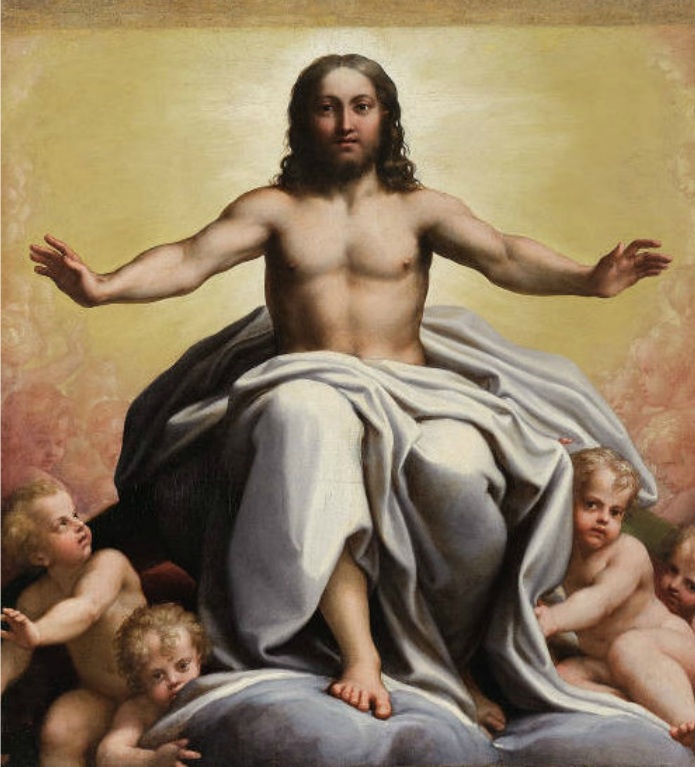
Created around the early 16th century, tt depicts Christ as the Redeemer, shown in a radiant, heavenly vision.
Christ is placed at the center of the composition, surrounded by a luminous aura and enveloped in clouds. He is shown rising or enthroned in glory, a symbol of divine majesty and salvation. Around Him, angels and cherubim appear, some holding instruments of the Passion, others gazing upward in adoration. The dynamic arrangement of the figures and the swirling movement of the clouds exemplify Correggio’s mastery of illusionistic composition and his pioneering use of light to create a sense of celestial space.
The work reflects the artist’s characteristic blend of softness, grace, and spiritual intensity, foreshadowing the later Baroque taste for dramatic, light-filled visions of the divine.